
Many traders calculate position size using a static pip value. They assume that a pip on EUR/USD is always worth $10 for a standard lot. If you denominated your account in US Dollars, that works for EUR/USD. But if you trade cross-rates or change your account currency, that assumption falls apart. The math of conversion is dynamic, and ignoring it will cost you money.
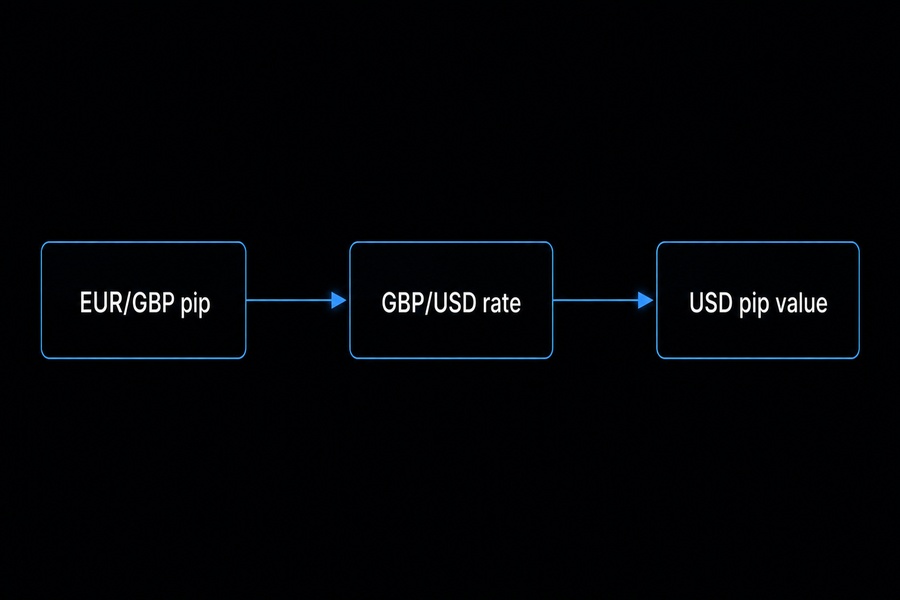
A pip represents a change in the fourth decimal place of the exchange rate. The value of this change is denominated in the quote currency of the pair. If you trade EUR/GBP, the pip value is denominated in British Pounds. If your account is in US Dollars, this value must be converted to Dollars using the GBP/USD exchange rate. The formula for the pip value in your account currency is:
Pip Value = (One Pip / Exchange Rate) * Position Size * Conversion Rate
Because the conversion rate GBP/USD fluctuates constantly, the pip value of your EUR/GBP position also changes every second. If you risk a fixed amount of Dollars per trade, your stop loss distance in pips must adapt dynamically to the changing conversion rate. A standard lot is always worth $10 on EUR/USD only because the quote currency matches your deposit currency.
A static risk model will lead to unexpected losses during periods of conversion rate volatility. If the conversion rate appreciates, the pip value increases, raising your exposure. To maintain a constant risk profile, you must calculate position size in real-time.
This dynamic calculation is essential for multi-position systems. By representing conversion rates as coordinate distances on the Cartesian plane, you can see how shifts in the major pairs affect the risk of your cross-rate positions. Stop using static approximations. Use algebra to manage your capital.
Related reading: Why Your Pip Cost Changes Every Second