The average retail trader operates like a gambler at a roulette table. You look at the past spins, see a streak of red, and bet on black because you believe a reversal is due. In Forex, you do the...
The retail trading industry is built on a mathematical falsehood. It tells you that price is a function of time. You look at a time/price chart and see a line moving from left to right. You...
Gurus measure volatility using lagging indicator formulas like Average True Range or Bollinger Bands. These tools tell you what range the price has already covered. They explain zero about the...
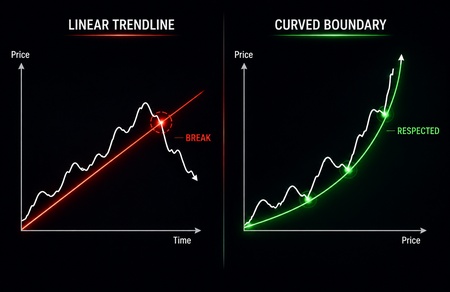
Drawing trendlines on a time/price chart is complete garbage. You draw a line connecting a few random lows, extend it into the future, and call it support. When the market smashes right through...
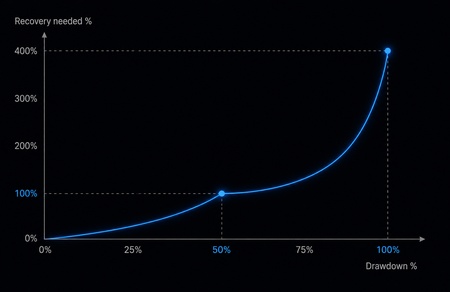
Let's talk about the math of losing. Most retail traders think about risk as a linear game. They lose 10% and think they just need to make 10% back. They lose 50% and think a 50% gain gets them...
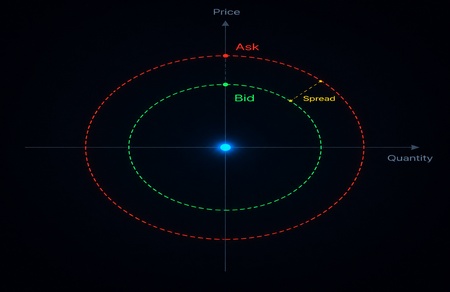
Every transaction in the foreign exchange market requires paying the spread. The spread is the difference between the bid price (what you can sell at) and the ask price (what you can buy at)....
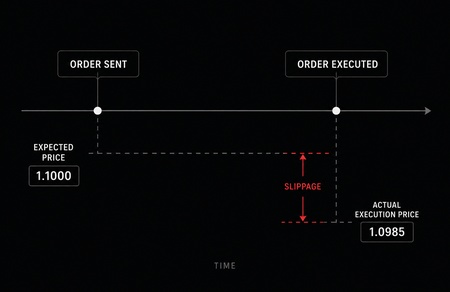
You expect your orders to execute at the exact price you click on. This is a naive retail expectation. In the live interbank market, there is always a lag between your order transmission and its...
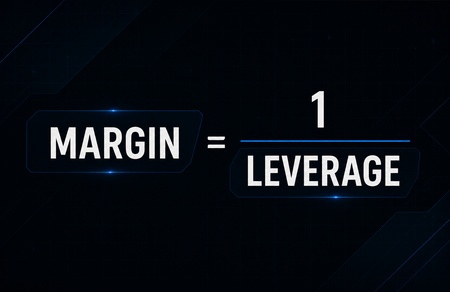
Brokers sell you leverage as a gift. They tell you that a leverage of 1:500 allows you to control huge positions with a tiny deposit. What they hide is the algebraic constraint that leverage...
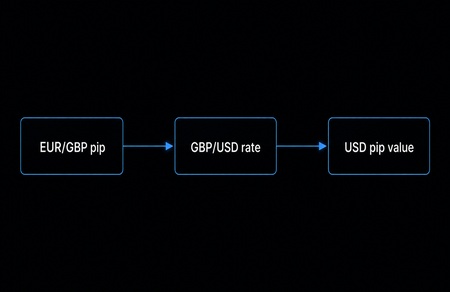
Many traders calculate position size using a static pip value. They assume that a pip on EUR/USD is always worth $10 for a standard lot. If you denominated your account in US Dollars, that works...
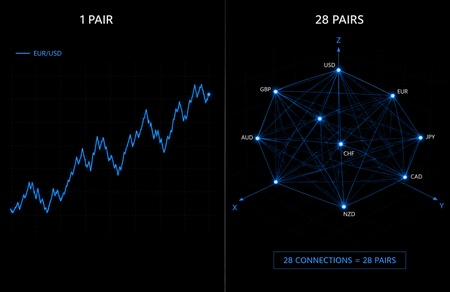
Traders waste hundreds of hours backtesting a single pair in isolation, optimizing indicators, and staring at beautiful, fake profit curves. When they go live, the strategy blows up. They call it...
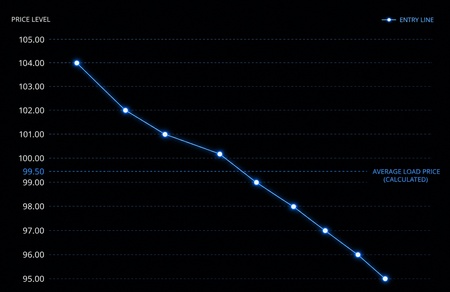
Grid trading sounds easy. You place orders at set intervals, wait for price to swing, and collect. But if you run a grid without calculating your net exposure, you are begging for a margin call....
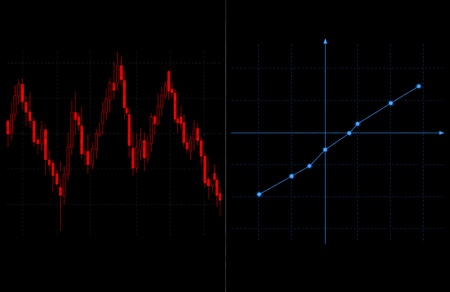
Retail trading books are stuffed with visual garbage. Head and shoulders, flags, double tops. Gurus draw lines and make predictions. If these visual patterns worked, 90% of retail traders wouldn't...
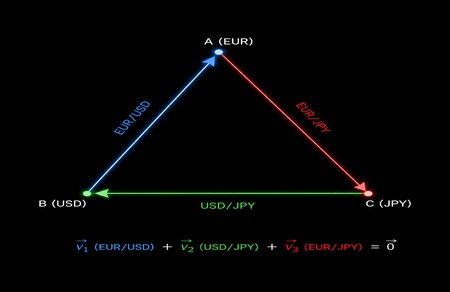
Traditional hedging is lazy, expensive broker food. You open a trade, it goes against you, and you open an opposite trade on the same pair. You pay double spreads to sit in a flat freeze. This...
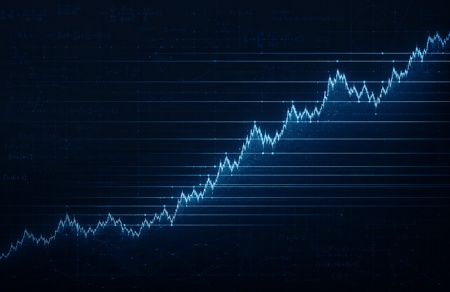
Most conversations about trading focus on entries. Which indicator gave the signal. Which pattern appeared on the chart. Which level to watch. The entry is treated as the decisive...
More than 90% of retail traders lose capital in the long run. In any other technical field, a systematic failure rate of that magnitude would trigger an immediate review of the fundamental tools...
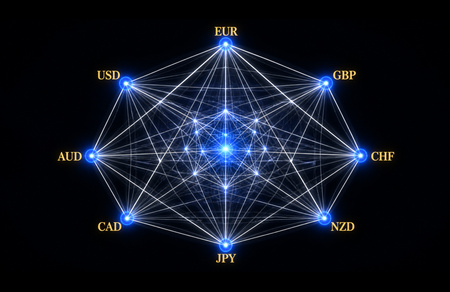
When a retail trader opens their platform, they choose a pair. EUR/USD. GBP/JPY. USD/CHF. The choice feels natural because the platform is designed around it. Each pair has its own chart, its own...
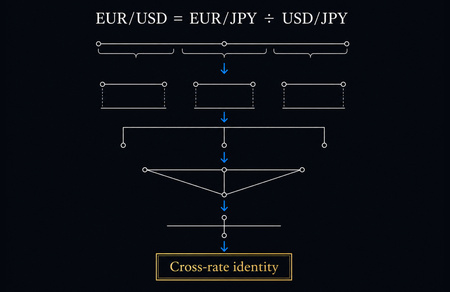
Most forex education is built on accumulated opinion. A successful trader describes what they do. A course producer packages that description into a curriculum. The student learns the pattern, the...
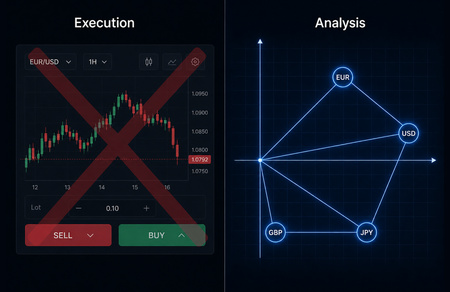
The most common misunderstanding about jMathFx is categorical. People encounter it for the first time and reach for the nearest familiar category: trading platform. This is wrong, and the...
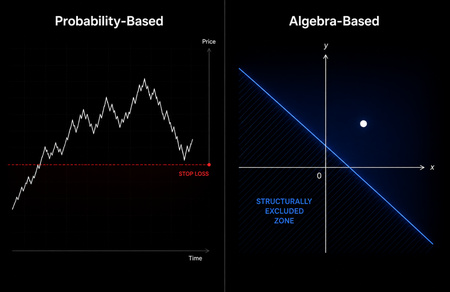
Stop loss is a tool designed for a specific condition: not knowing where the market is going. If you cannot identify the boundaries of the possible price space for the pair you are trading, you...
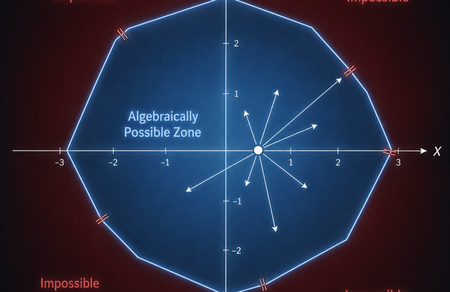
Before a trade makes sense, a simpler question deserves an answer: is the proposed price level algebraically possible? Not probable. Possible. This is a question the forex market can answer with...
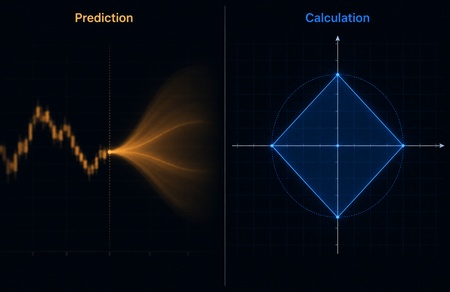
Every forecasting tool in retail trading is built on prediction. Indicators, patterns, sentiment analysis, economic calendars: they all produce a probability estimate. The price is more likely to...
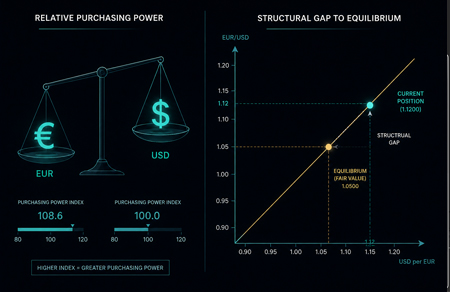
Purchasing power parity is taught in macroeconomics as a long-run tendency. Two economies, two price levels, one exchange rate that should equalize what a unit of currency can buy across borders....
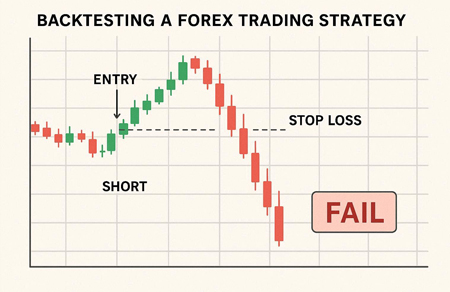
Backtesting is considered a standard step in strategy development. You build a set of rules, apply them to historical time/price data, measure the results, and decide whether the...
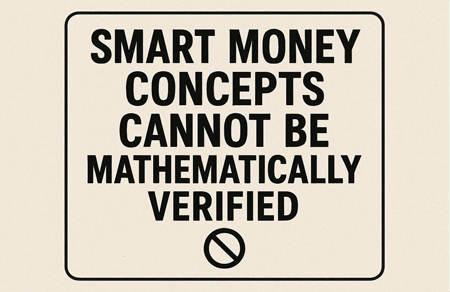
Smart Money Concepts have become one of the most discussed frameworks in retail forex trading. Order blocks, fair value gaps, liquidity sweeps, market structure breaks. The terminology...
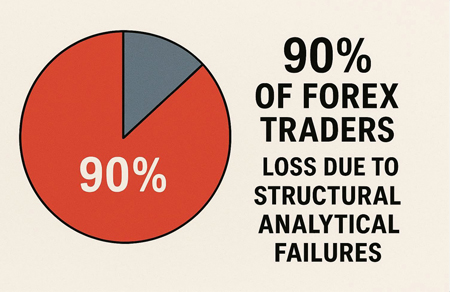
Ninety percent of retail forex traders lose money. This figure has been consistent across brokers, across years, across markets. The trading industry has built an entire narrative around...
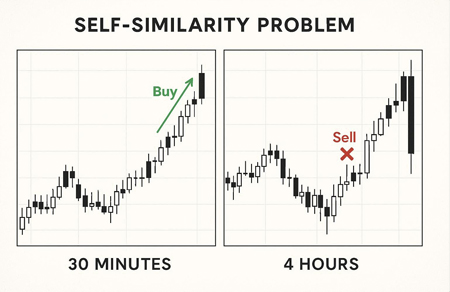
A trader analyzes EUR/USD on a daily time/price chart and reads a clear uptrend. The same trader switches to the four-hour chart and finds a consolidation. On the one-hour chart, the...
At first, trading on the forex market may seem like an accessible and calm activity for most people. Everyone speaks highly of it. However, the reality is that the forex market is more...

The majority mistakenly believes that to beat the market and consequently make money, it is necessary to find many strategies. This has led to the belief that diversifying the best available...

Interpreting financial data through common candlestick charts can conceal pitfalls.
Candlestick charts are widely used...